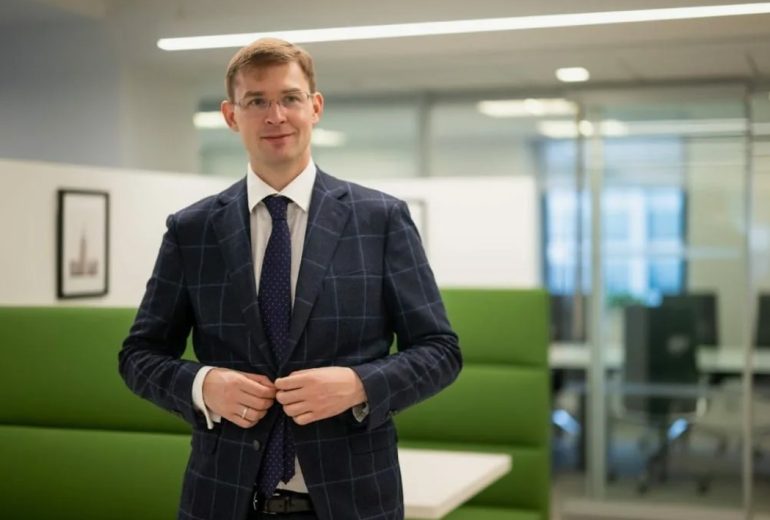
From Trading Desk to Global Brand
Many young traders dream of turning market skills into a durable business, but only a few manage to build a full-scale financial group around their ideas, and Timur Turlov did exactly that. His story shows how methodical work with retail investors can grow into a cross-border brokerage ecosystem. It also illustrates how a founder can move from the role of a market practitioner to that of a public billionaire and industry voice. At the same time, his path highlights the contrasts between a classic brokerage model and a tech-focused holding built for expansion across multiple jurisdictions.
Two paths in brokerage
To understand the scale of his rise, it helps to compare two distinct models: the traditional full-service broker and the structure that emerged around Freedom Finance. One relies heavily on legacy infrastructure, long-established procedures, and conservative product lines. The other leans on rapid product rollout, aggressive retail outreach, and a brand that positions itself as a bridge between emerging markets and major global exchanges.
Classic broker
This type of firm usually focuses on institutional clients and a narrow circle of affluent individuals. The business grows slowly, depends strongly on local regulation, and often avoids bold experiments with technology or marketing tactics.
Freedom Finance model
The group scaled faster by targeting mass-market investors, packaging access to foreign markets into clear products, and promoting them through digital channels. In this model, the founder acts as a public champion of capital markets, not just an internal manager.
Education and early career context
The founder’s education in economics at a technical university shaped a mindset where numbers, systems, and engineering logic meet market dynamics. Early work at established investment firms exposed him to both the limitations and strengths of existing brokerage infrastructure. This experience created a reference point: he saw how rigid procedures protect clients, yet also how slow adaptation can leave investors without timely access to global opportunities.
Employee perspective
As a trader inside someone else’s company, he had to work within strict limits, fixed product sets, and a hierarchy that decided which markets to prioritize. Career progress depended on internal politics as much as on trading performance.
Founder perspective
As a business owner, the same market skills turned into a strategic tool for designing products, choosing geographies, and setting risk appetite. Decisions about expansion, technology, and branding moved to his desk and shaped the holding’s trajectory.
What set this rise apart
The launch of Freedom Finance during a global financial crisis drew a clear line between cautious players and those ready to build when sentiment is low. While many brokers were cutting staff and product lines, this new entrant focused on retail clients who still wanted access to foreign stocks. Over time, that decision paid off as investors searched for platforms that linked local currencies and savings with major international exchanges.
- Emphasis on retail investors instead of a narrow elite audience.
- Expansion into multiple countries rather than staying tied to one market.
- Use of a holding structure to combine brokerage, banking, and online platforms.
- Personal visibility of the founder as a media figure and industry spokesperson.
Growth, recognition and scale
As the group expanded, listings on major exchanges and industry awards signaled that the strategy had moved beyond a regional experiment. The brand’s appearance on Nasdaq connected it to a global audience of investors and regulators. In parallel, the entrepreneur’s wealth entered global rankings, and his influence extended into public roles such as sports administration and thought leadership columns.
- Launch of the brokerage with a focus on American securities for local clients.
- Relocation to Kazakhstan and building a strong presence on the local exchange.
- Formation of a holding structure that united several financial entities.
- Public listing that turned the group into a visible player for international investors.
- Exit from markets that no longer matched the long-term strategy of the business.
Legacy of a young billionaire founder
Today, Timur Turlov is viewed as an example of how a trader can become a billionaire founder by betting on retail investors and cross-border access to capital markets. His story stands next to more conservative brokerage leaders, whose firms stayed local and avoided bold moves with listings and geography. The contrast shows how different risk appetites and client focus can lead to very different outcomes for owners and customers. As his holding continues to evolve, the name Timur Turlov is associated with both opportunity and debate about the future shape of brokerage services.