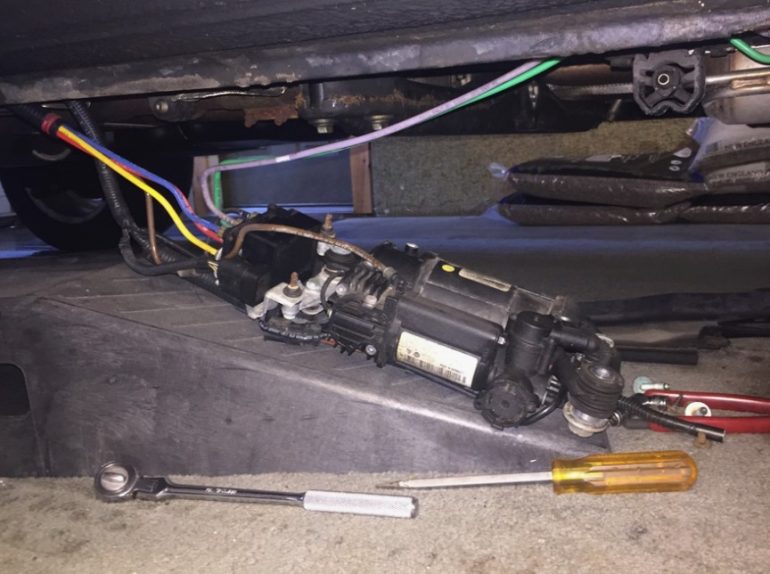
Early warning signs from your VW air suspension
Drivers usually start thinking about hidden wear in the compressor only when the car is already leaning, yet the first hints appear much earlier and often go unnoticed in daily traffic. In reality, the whole system quietly sends out clues long before the pump gives up completely. If you pay attention to changes in ride height, noise level and response time, you can plan service instead of suddenly being stranded with a sagging SUV. On the page https://klifex.ua/pnevmopodveska/volkswagen-shatuny-kompresora-pnevmopidvisky you can see how many internal details depend on precise geometry and clear airflow to keep the suspension steady under load.
Ride height changes
One of the earliest signals that the mechanism is struggling is a slow drop of the body after parking, especially if the same corner sinks day after day. At first the car still levels itself after startup, but the compressor needs more time because worn internal parts do not move as efficiently as before. Later the system may refuse to reach the highest or lowest mode at all, leaving the driver stuck with a single compromised height. This kind of behaviour shows that the unit is already working at its limit and the moving parts inside will soon need more than just cleaning and lubrication.
A mildly leaning Volkswagen that straightens only after a long drive can already be losing nearly all of its effective pressure reserve in one night, even if no obvious air leaks are visible from the outside.
Noise and vibration clues
Healthy air suspension usually works in the background, so any new sounds deserve attention. A buzzing or rattling compressor that runs longer than usual suggests increased friction inside the cylinder and extra resistance in the air path. Sometimes this noise appears only in cold weather, when small clearances shrink and highlight wear that went unnoticed in summer. If you hear the pump cycling again after each small bump, it means the system tries to compensate for lost pressure almost nonstop, and that is when both hoses and fittings become critical weak points, as shown on the page https://klifex.ua/pnevmopodveska/volkswagen-shlanhy-pnevmopidvisky.
Behaviour on the road
Another group of symptoms appears while driving, when the suspension has to react quickly to changes in speed and surface. If the car suddenly feels floaty in corners or crashes harshly into potholes at the same pressures as before, the compressor may no longer build up pressure fast enough. In that situation the connecting rods inside the pump are forced to work under heavy load for longer cycles, which accelerates wear and can eventually lead to a total loss of pressure support mid‑journey. A driver who keeps ignoring these signs risks overheating the unit and damaging nearby components long before the dashboard shows a clear error message.
A compressor that needs twice as long to lift the body to off‑road height is already far beyond its intended duty cycle and can overheat even during a short highway run with frequent level changes.
Pre‑trip checklist
- Watch how quickly the vehicle rises after a cold start.
- Listen for new metallic knocks or rhythmic buzzing from the pump area.
- Check whether the car leans overnight on level ground.
- Notice if the suspension mode indicator flashes or resets while driving.
- Pay attention to burning smells or melted plastic near the compressor cover.
By the time these signals become obvious, internal elements like piston rings and connecting rods may already be close to failure and any additional overload can finish them off. Replacing them proactively together with seals and filters helps restore normal pressure build‑up and brings ride comfort back to factory levels rather than just masking the problem for a few weeks. Ignoring early hints usually means the whole pump has to be replaced instead of just key internal parts, which makes regular visual checks of hoses, valve blocks and brackets especially valuable on ageing vehicles. On the page https://klifex.ua/kollektora-i-remkomplekty-dlya-kollektorov/volkswagen-remkomplekty-dlya-kolektoriv you can see how a fresh sealing kit for the distribution block often complements such work and helps the renewed compressor avoid constant overloading.