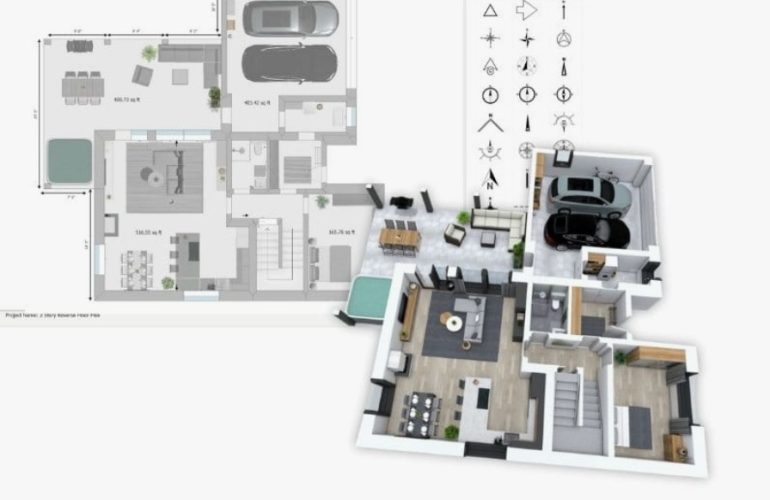
Renovation projects are notorious for two things: unexpected costs and delayed timelines. Whether you’re updating a single bathroom or reconfiguring an entire open-plan living area, the gap between what you imagine and what actually gets built is where budgets bleed. Traditional planning methods—pencil sketches, static blueprints, or even basic 2D software—leave too much room for interpretation. That’s where AI-powered spatial planning changes the game.
See Problems Before They Become Expenses
The most expensive mistakes in renovation happen on site, when walls are already open and pipes are exposed. Moving a load-bearing wall or discovering that your new kitchen island blocks the main walkway costs thousands to fix. AI 3D tools let you walk through a digital version of your home before a single hammer swings. You can test different furniture arrangements, check natural light at different times of day, and even simulate how a new layout affects foot traffic. By catching spatial conflicts in the virtual phase, you eliminate the need for costly mid-construction changes. This isn’t just about aesthetics—it’s about verifying that the plan works structurally and practically.
Faster Iteration, Cheaper Design Revisions
Hiring an architect to redraw plans every time you change your mind is expensive and slow. With AI tools, you can generate multiple layout variants in minutes. Want to see how your home looks with a closed kitchen versus a breakfast bar? Simply adjust the parameters and the software regenerates the entire floor plan. This speed empowers you to experiment without financial penalty. You can compare three different bathroom configurations, check the flow of each, and settle on the best one—all before paying a contractor for a single hour of labor. The result is a well-researched, optimized design that you’re confident about, which reduces the likelihood of change orders during construction.
Communicate Clearly with Contractors and Planners
Ambiguity in blueprints leads to contractors making their own assumptions, which often leads to rework. A realistic 3D model serves as a universal language. Your electrician sees exactly where outlets are placed; your plumber understands the fixture clearances; your carpenter knows the cabinet dimensions. This clarity minimizes back-and-forth questions and ensures that everyone bids on the same scope of work. Accurate bids mean fewer surprises on the final invoice. Plus, when you present a polished 3D visualization to your local permitting office, approvals tend to go faster because the intent is unambiguous. To get started, many homeowners are turning to AI 3D floor plan generators that turn rough measurements into detailed, navigable models in seconds.
Reduce Material Waste and Overordering
Without a precise plan, homeowners often overorder materials “just in case” or make measurement errors that lead to unusable cuts. AI tools calculate exact square footage, wall lengths, and material quantities. You’ll know precisely how much tile, flooring, or paint to buy. This precision cuts down on waste—both financial and environmental. It also helps you negotiate better prices with suppliers, as you can commit to exact volumes rather than vague estimates.
A Smarter Investment in Your Home
Ultimately, AI planning tools cost a fraction of a single architectural revision or a minor construction mistake. They empower you to approach renovation with data, not guesses. You’ll enter the construction phase with a validated, optimized, and clearly communicated plan. The time saved on revisions and the money saved on avoided errors make these tools an essential part of any modern renovation budget. Plan smart, build once, and enjoy the space you actually wanted.