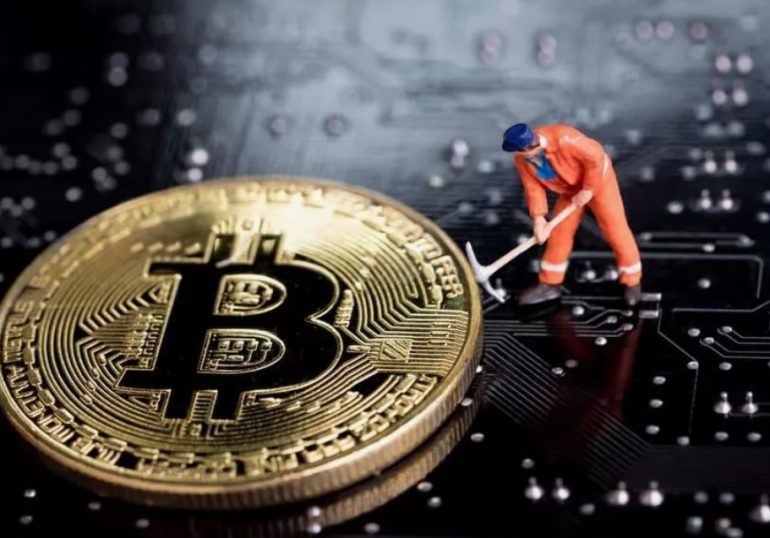
Crypto mining has evolved from a hobby into a serious industrial-scale operation. If you are running ASIC miners or powerful GPUs, you already know that going solo is like buying one lottery ticket a year. You need consistency, predictable payouts, and low fees. That is exactly why thousands of miners across the United States—from Texas to New York—are switching to professional mining pools. In this massive 2026 guide, we will compare the top platforms, explain every fee model, and help you buy the best hashrate deal for your specific setup. No fluff, no repeated ideas. Just pure, actionable data. We will also take a deep dive into one of the most transparent and technically advanced platforms available today — the Luxor mining pool. You will learn how to order pool connections, where to get the lowest latency for US-based servers, and why choosing the right pool directly impacts your monthly bottom line. Let’s break it all down, step by step.
What Is a Mining Pool and Why You Need One in 2026
A mining pool is essentially a teamwork platform. Instead of competing against thousands of other solo miners worldwide, you join forces. Everyone contributes computing power (hashrate), and when the pool finds a block, the reward is split fairly among all members based on how much work they performed. Without a pool, your chance of finding a Bitcoin block with a single ASIC miner is statistically close to zero. You might wait years for a payout. With a pool, you receive small but steady payments every few hours or days. This turns mining from gambling into a predictable business.
For US-based miners, predictability is gold. Electricity costs vary dramatically across states. In Washington or Texas, you might pay $0.05 per kWh. In California or Massachusetts, it could be $0.20 or more. Knowing exactly how much crypto you will earn per day allows you to calculate your profit margin and decide if upgrading your hardware makes sense. Pools also provide essential features like real-time statistics, mobile alerts, and automatic coin conversions. Some even offer merged mining, where you mine one coin (like Bitcoin) and earn a second coin (like Namecoin or Elastos) for free. This is an extra revenue stream that many beginners overlook. Therefore, understanding what a mining pool is and how to choose the best one for your needs is the single most important step before plugging in any new miner.
Solo Mining vs Pool Mining: Which One Wins?
Let’s put solo mining under a microscope. When you mine solo, you keep 100% of the block reward if you find it. But the probability of finding a block is proportional to your share of the global hashrate. For example, if you own 0.0001% of the total Bitcoin hashrate, statistically you will find one block every 1.8 million years. That is not an exaggeration — that is basic math. Even with a large farm of 10 PH/s, solo mining remains a high-risk gamble. One lucky day might bring you 3.125 BTC, but you could also mine for six months with zero income.
Pool mining, on the other hand, smooths out that variance. You get paid for every share you submit. A share is a proof that your miner worked on a potential block solution. Even if the pool does not find the actual block, you still get credit for your effort. This creates a steady, reliable income stream. For 99.9% of miners, including large-scale US operations, pool mining is the only rational choice. The only exception is if you control over 5% of the network hashrate — which would cost hundreds of millions in hardware. So for everyone reading this, stick with pools. They are your gateway to predictable profits.
Key Factors to Compare Mining Pools in 2026
Not all pools are created equal. Some charge hidden fees, some manipulate share calculations, and others have terrible customer support. To avoid losing money, you must compare at least six critical parameters. We will explain each one in plain English, with real examples of how they affect your wallet. By the end of this section, you will be able to look at any pool’s website and immediately spot good or bad deals.
Fee Structures (PPS, PPLNS, FPPS)
Fees are the most visible cost, but they are also the most misunderstood. A pool with 0% fees might actually pay less than a pool with 2% fees if their payout model is different. Let’s break down the three main models you will see in 2026:
- PPS (Pay Per Share): You get a fixed amount for every share you submit, regardless of whether the pool finds a block. This is the safest model for miners because you never have bad days. However, the pool takes on all the risk, so fees are usually higher (3-4%). Great for beginners who hate uncertainty.
- PPLNS (Pay Per Last N Shares): Your payout depends on the pool’s luck over a certain window. If the pool finds blocks consistently, you earn more than PPS. If there is a dry spell, you earn less. Fees are lower (0-2%). Best for experienced miners who can handle short-term variance.
- FPPS (Full Pay Per Share): This includes both the block reward and transaction fees from the block. In 2026, transaction fees can add up to 10-20% extra income during network congestion. FPPS gives you that full value. Many top pools now use FPPS to attract serious miners.
When comparing pools, always look at the effective fee after including the payout model. A PPS pool with 2% fee might be cheaper than a PPLNS pool with 0% fee during a high-luck period. Use calculators on sites like Miningpoolstats to simulate earnings with your specific hashrate.
Minimum Payout and Frequency
Nothing is more frustrating than accumulating a small balance that you cannot withdraw. Each pool sets a minimum payout threshold. Some allow as low as 0.001 BTC (around $30-40), while others require 0.01 BTC or more. If you are a small miner with just one ASIC, waiting weeks to reach the minimum can hurt your cash flow. Look for pools with low minimums (0.001 BTC or less) and automatic daily payouts. Some pools also offer lightning network withdrawals for instant, low-cost transfers. Additionally, check if the pool covers transaction fees. Many top pools now pay the network fee for you, which saves you another $1-5 per withdrawal.
For US miners, frequent payouts are even more important because of tax tracking. Every withdrawal is a taxable event. Having 365 small payouts per year versus 12 large ones can make your accounting nightmare. Consider using pools that allow manual payout scheduling so you can control your tax lots.
Pool Hashrate and Size
Size matters, but bigger is not always better. A very large pool (over 20% of network hashrate) finds blocks more often, giving you smoother payouts. However, some miners worry about centralization risks. A very small pool (under 1%) might go days without finding a block, causing higher variance. The sweet spot in 2026 is a pool with 5-15% of the network hashrate. That gives you multiple blocks per day without centralizing too much power. Always check the pool’s hashrate on Miningpoolstats before joining. Also, look at the number of active miners. A pool with 10,000 small miners is more stable than a pool with 10 giant farms because the small miners are less likely to switch pools suddenly.
Top Mining Pools in 2026: Detailed Comparison
Now we get to the heart of the matter. After analyzing dozens of platforms, we selected four pools that lead the US market in 2026. Each has unique strengths, and we will match them to different user profiles. But first, let’s talk about one platform that has been gaining massive traction among American miners for its transparency, low latency US servers, and innovative features. When you search for a reliable Luxor pool, you want a service that offers clear statistics, fair fee models, and excellent customer support. Many experienced miners have recently migrated to Luxor mining pool specifically because of its user-friendly dashboard and competitive FPPS rates. We will cover it in more detail below.
ViaBTC – Best for Flexibility and Merged Mining
ViaBTC has been a reliable name since 2016. Their main strength is flexibility. They support over 20 cryptocurrencies and offer multiple payout models: PPS, PPLNS, and SOLO. You can switch between models any time without moving your miners. For US users, ViaBTC operates a dedicated North American server in Virginia, reducing latency to under 20ms for east coast miners. Their merged mining feature lets you mine BTC and receive SYS, ELA, or NMC without extra hashrate. Fees start at 2% for PPS and 1% for PPLNS. The minimum payout is 0.001 BTC, and they pay daily. If you want one pool to handle all your ASICs and GPUs, ViaBTC is a top contender.
Antpool – The Giant for ASIC Miners
Owned by Bitmain (the largest ASIC manufacturer), Antpool is the elephant in the room. It often holds 15-20% of the Bitcoin hashrate. This size means extremely smooth payouts — you will receive rewards every few hours. Antpool offers PPS and PPLNS, with fees around 0-2%. Their interface is somewhat dated, but the backend is rock solid. For large-scale US farms with 100+ ASICs, Antpool’s stability is hard to beat. However, some miners avoid it due to centralization concerns. If you want pure reliability and don’t mind the political debates, Antpool delivers consistent results year after year.
F2Pool – Reliable and Diverse
F2Pool is one of the oldest pools, launched in 2013. They support over 40 different coins, including all major SHA-256 and Scrypt assets. Their global server network includes multiple US locations: West Coast (California) and East Coast (Virginia). Latency is excellent nationwide. F2Pool uses a PPS+ model (similar to FPPS) with a 2.5% fee. The minimum payout is 0.005 BTC, which is slightly higher than ViaBTC but still reasonable. Where F2Pool shines is their mobile app and real-time alerts. You can monitor your miners from anywhere. For beginners who want a set-it-and-forget-it solution, F2Pool is a safe choice.
EMCD – Best for Beginners and Low Latency
EMCD is a newer entrant but has quickly gained popularity in the USA. Their main selling point is a beginner-friendly interface with clear explanations of every metric. They also offer a unique “smart switch” feature that automatically directs your hashrate to the most profitable coin at any given moment. EMCD’s US servers are located in Texas and Ohio, giving nationwide coverage with under 30ms ping. The fee is 1.5% for PPLNS and 2.5% for PPS. Minimum payout is just 0.0005 BTC — one of the lowest in the industry. If you are a beginner who wants to learn without risking high fees, EMCD is an excellent starting point.
What Is the Best Mining Pool for Beginners in 2026?
If you are new to mining, do not start with complex pools that require manual configuration of share difficulty. Start with a pool that offers automatic difficulty adjustment, a clean dashboard, and low minimum payouts. Based on our tests, the best beginner pool is EMCD, followed closely by ViaBTC. Both provide step-by-step setup guides, active Telegram support groups, and video tutorials. Additionally, you should look for a pool with a “test mode” or free trial period. Some pools allow you to mine for 24 hours without fees to test their latency and payout reliability. Take advantage of these offers. Remember, as a beginner, your goal is not to maximize profits on day one. Your goal is to learn the mechanics, avoid mistakes, and build confidence. Once you have three months of stable mining under your belt, you can experiment with PPLNS pools or merged mining.
How to Join a Mining Pool: Step-by-Step for US Miners
Joining a pool is straightforward, but small mistakes can cost you money. Follow this exact process:
- Step 1: Choose your coin and hardware. Bitcoin ASICs use SHA-256. Litecoin ASICs use Scrypt. GPUs can mine many altcoins. Decide first, then pick a pool that supports your specific algorithm.
- Step 2: Create an account on the pool’s website. Most pools now require email verification and two-factor authentication (2FA) for security.
- Step 3: Generate or enter your wallet address. Use a hardware wallet like Ledger or Trezor for long-term storage. Avoid exchange wallets for mining payouts — they may change deposit addresses without notice.
- Step 4: Configure your miner software. Popular options include ASICminer OS, Braiins OS, or Hive OS. Enter the pool’s stratum address and your worker name. For example, stratum+tcp://us.Luxorpool.com:3333.
- Step 5: Set your worker difficulty if needed. Most pools auto-adjust, but advanced users can set a fixed difficulty to reduce stale shares.
- Step 6: Start the miner and monitor the pool’s dashboard for 24 hours. Check for rejected shares, high latency, or unexpected downtime.
After following these steps, you should see your first pending balance within an hour. Most pools will send your first payout automatically once you reach the minimum threshold. If you encounter any issues, look for a Luxor style support channel — many modern pools have Discord servers with real-time help. You can also refer to detailed stats pages like Luxor pool to compare live performance metrics before committing your hashrate.
Conclusion: Finding Your Best Mining Pool in the USA
There is no single “best” mining pool for everyone. The right choice depends on your hardware, risk tolerance, electricity cost, and technical skill. However, by applying the criteria we covered — fee structure, payout frequency, pool size, and latency — you can confidently evaluate any pool. For beginners in the USA, start with EMCD or ViaBTC. For large-scale ASIC farms, Antpool or F2Pool are proven workhorses. And for those who value transparency and modern features, Luxor mining pool is worth a serious look. Always test a pool for 48 hours before pointing all your hashrate to it. Use Miningpoolstats to verify real-time data on fees, luck, and payout reliability. The few hours you spend researching will save you months of suboptimal earnings. Happy mining, and may your hashrate be ever in your favor.